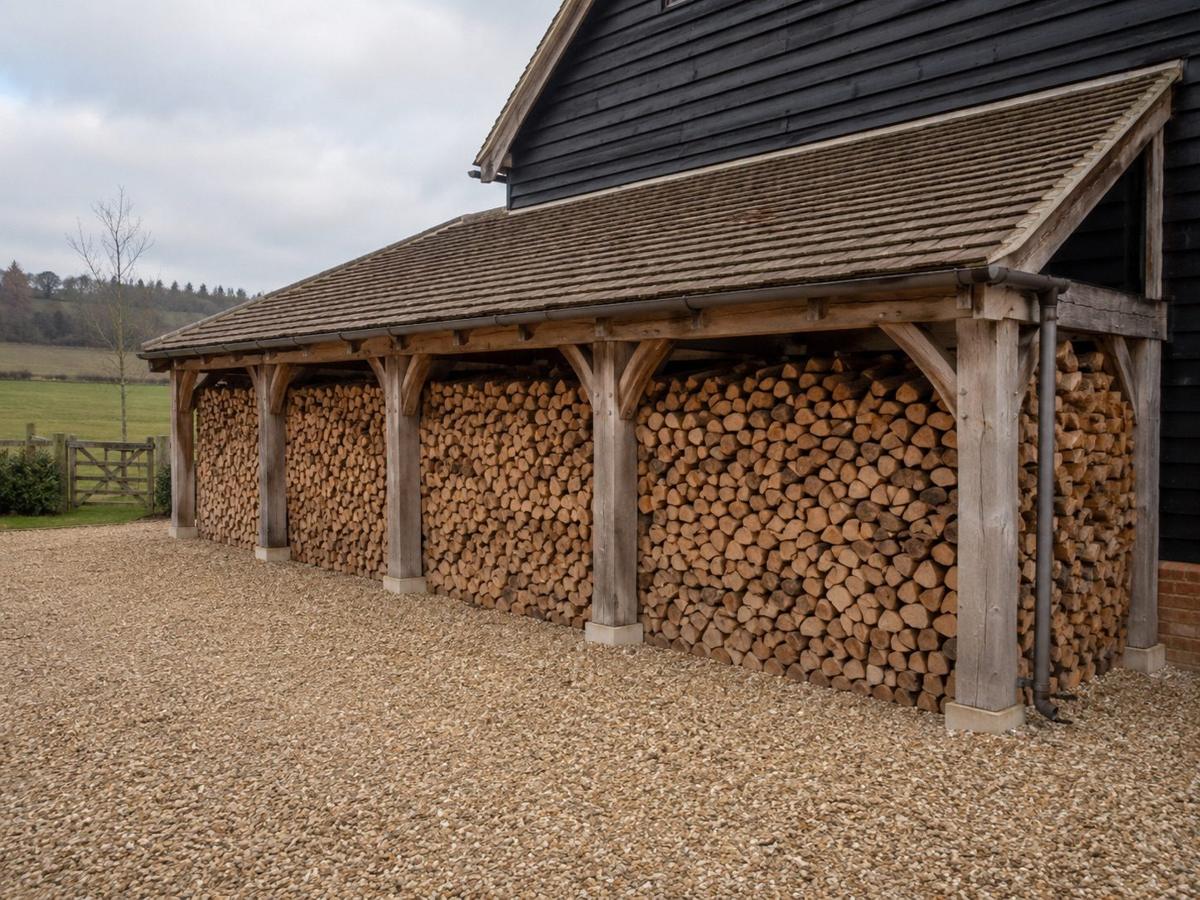
A practical, no-nonsense answer for open fires, wood burners, fire pits and pizza ovens, based on how often you actually burn.
Last updated August 2026 · William Alexander Logs
The single biggest factor in how much firewood you need is frequency, not the size of your living room or the number of bedrooms in the house. A wood burner lit most evenings through autumn and winter gets through far more wood than the same burner lit only on cold snaps and special occasions, regardless of how big the room is. That is why our own quick guide on the firewood page asks what you burn in and how often, rather than asking about your house.
These are the numbers we see in practice from our own customers, using our Easy Bags (18 to 25kg each) as the reference size. Barrow Bags hold roughly three times as much, so divide by three if you are working in Barrow Bags instead.
Because kiln-dried logs are already below 20% moisture, more of the energy in each log goes into heat rather than driving off water first. In practice that means a kiln-dried fire burns hotter and for longer per log than an unseasoned or barely-seasoned log of the same size, so you tend to use noticeably fewer logs for the same evening's fire. If you are used to buying seasoned logs from a garden centre or a farm gate and switching to kiln-dried for the first time, it is worth starting with the lower end of the ranges above and topping up if you need to, rather than over-ordering.
Think back to last winter. If you lit a fire two or three evenings a week from October to March, that is roughly 25 weeks of "regular use". If it was every single evening, that is "daily use". If you only lit it when it was genuinely cold, that is "occasional use". Match that pattern to the bag counts above and you will be within a bag or two of what you actually need. It is always cheaper to order what you need in one go, since our pricing gets better the more bags you buy, and kiln-dried logs store well in a dry log store or shed until you need them, so there is little downside to rounding up rather than down.
Both can burn well. The difference is how the moisture is removed, and whether you can trust it before you strike a match.
Read the guide →Kiln-dried logs arrive ready to burn. Storing them well is what keeps them that way until you need them.
Read the guide →The single number that determines whether your fire lights easily and burns clean, or smoulders and smokes.
Read the guide →Kiln-dried, Woodsure Ready to Burn certified firewood and peat-free compost, delivered on the day you choose.