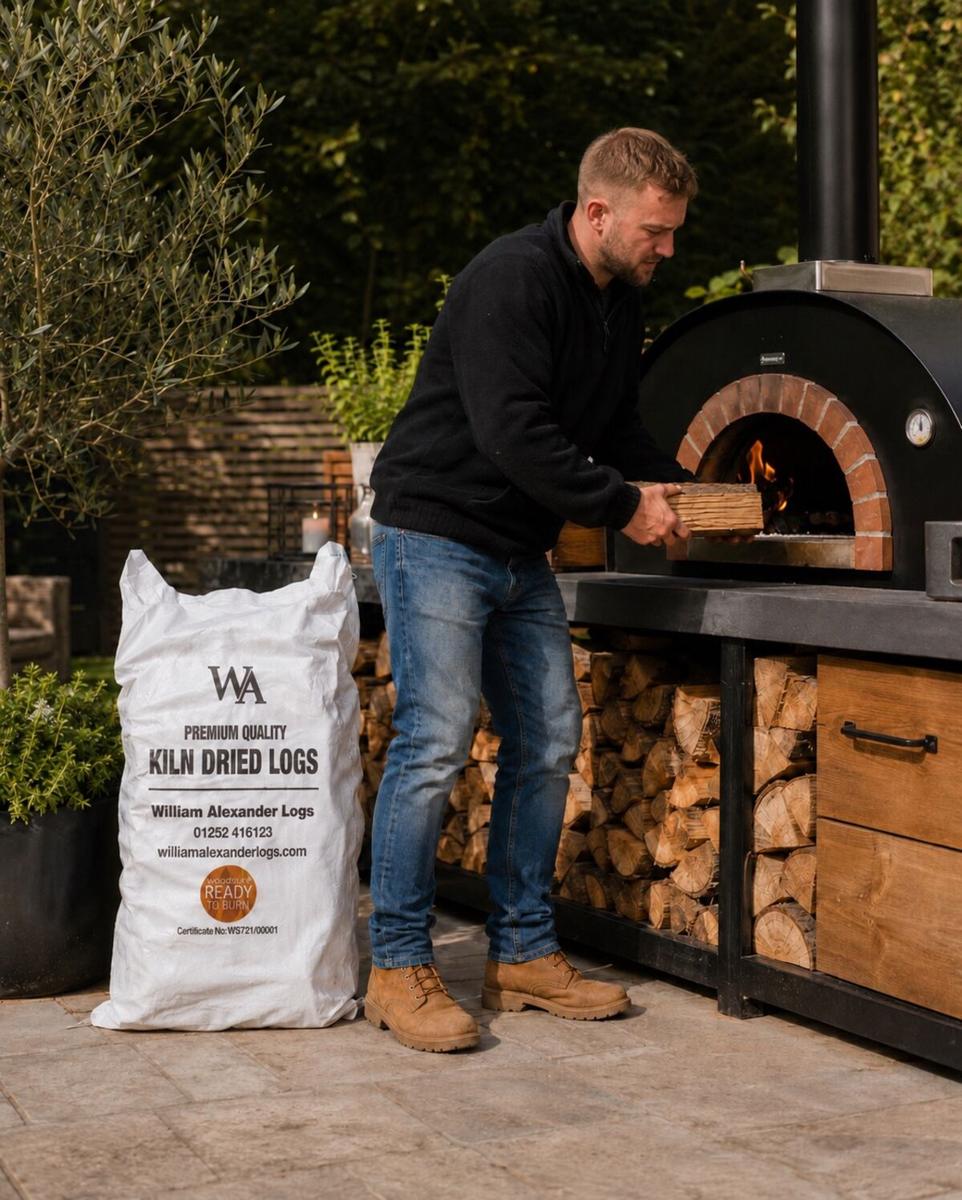
Two very different fires, two different woods. Here's what actually works for each, and why.
Last updated August 2026 · William Alexander Logs
A wood-fired pizza oven needs to reach and hold a high temperature, typically 350 to 450°C at the floor, for a proper Neapolitan-style base. That calls for a dense hardwood that burns hot and produces a good bed of embers to maintain temperature between pizzas, rather than a fast, light burn that flares and dies down quickly. Hornbeam is our own pick for this: it is one of the densest, hottest-burning woods commonly available in the UK, similar to oak but often running even hotter.
A softwood or a light, quick-burning hardwood will get an oven hot briefly, but the temperature drops fast between firings, which means a longer wait between pizzas and a less consistent bake. Wet or unseasoned wood is worse still: heavy smoke inside a domed oven affects the flavour of the food as well as the heat, which is another reason to only ever use properly dried, kiln-dried or Ready to Burn certified wood in a pizza oven.
A fire pit or chiminea is a different job entirely: you want a fire that lights easily, gets going fast, and is simple to top up through the evening as you sit around it. Alder is well suited here. It is a lighter hardwood that catches quickly and burns brightly, ideal for the more casual, hands-on nature of an evening around a fire pit, camping, or a chiminea on the patio.
For a pizza oven used regularly at weekends, budget around 4 to 5 Barrow Bags of Hornbeam across a season (Hornbeam is a Barrow Bag species). For a fire pit used through the warmer months, around 8 to 12 Easy Bags of Alder is a sensible starting point; see our guide on how much firewood you need for the fuller picture across all burner types.
Different hardwoods burn differently. Here's how the woods you'll actually find in UK log yards compare, and which we'd pick for what.
Read the guide →A practical, no-nonsense answer for open fires, wood burners, fire pits and pizza ovens, based on how often you actually burn.
Read the guide →Both can burn well. The difference is how the moisture is removed, and whether you can trust it before you strike a match.
Read the guide →Kiln-dried, Woodsure Ready to Burn certified firewood and peat-free compost, delivered on the day you choose.